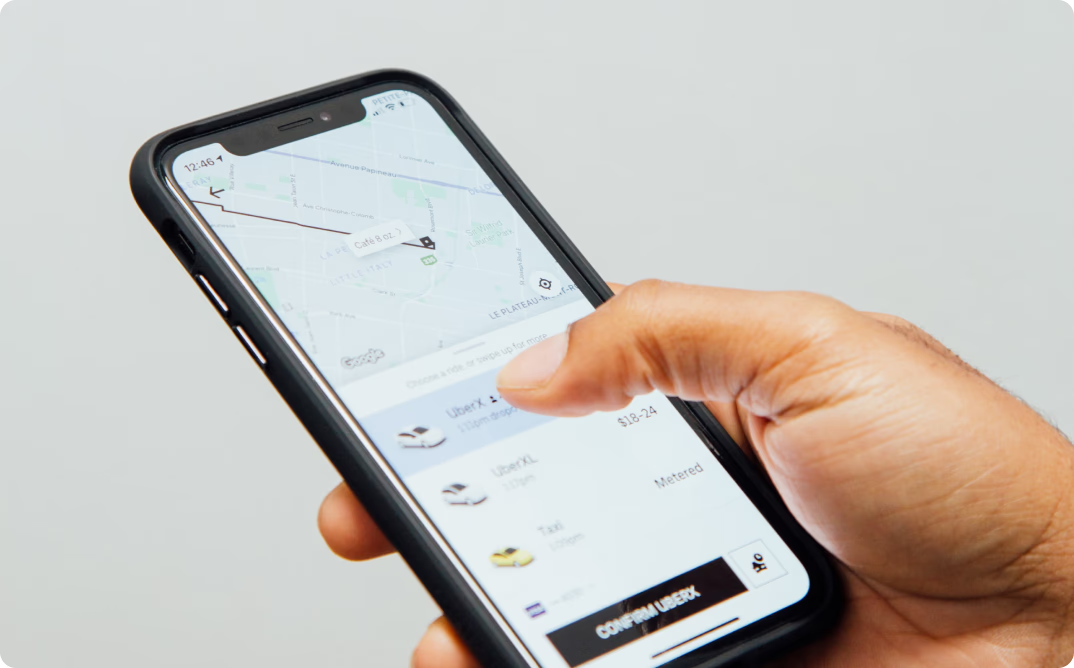
The phone rings. A stern voice claims to be from the police, the CBI or customs. A parcel in your name contained drugs, they say, or your Aadhaar number is linked to money laundering. You are told not to hang up, not to tell your family, and to stay on video call while "officers" investigate. Hours later, sometimes days later, your life savings have been transferred to "verify" your innocence.
This is the digital arrest scam, and it has become one of the cruellest forms of fraud in India. Its favourite targets are retired people: those with savings, those who respect authority, and those who may be alone at home. Protecting them is not just a matter of awareness. It requires rethinking how money itself can resist manipulation.
First, the most important fact
There is no such thing as a "digital arrest" under Indian law.
The Indian Cyber Crime Coordination Centre (I4C) has stated clearly in its public advisories that police, CBI, customs, the Enforcement Directorate and judges do not arrest people over video calls and do not demand money to settle investigations. Prime Minister Narendra Modi also warned citizens about digital arrest scams in the Mann Ki Baat broadcast of 27 October 2024.
If you remember only one thing from this article, remember that. And share it with every elderly person you know.
How big is the problem?
The scale of cyber-enabled fraud in India has grown dramatically.
- The Ministry of Home Affairs informed the Lok Sabha that Indians lost about ₹22,845.73 crore to cyber fraud in 2024, up from about ₹7,465.18 crore in 2023.
- Combined complaints on the National Cybercrime Reporting Portal and the Citizen Financial Cyber Fraud Reporting and Management System reached about 36.37 lakh in 2024, up from 24.42 lakh the year before.
- An RBI discussion paper released on 9 April 2026 noted that digital payment frauds rose more than tenfold to around 2.8 million cases between 2021 and 2025, while the value lost jumped nearly forty times to about ₹23,000 crore.
Digital arrest scams are one part of this wider wave, but they are among the most damaging per victim, because they are designed to extract large sums through prolonged psychological pressure. News reports throughout 2025 and 2026 have described elderly victims losing crores of rupees in single cases.
In December 2025, the Supreme Court directed the CBI to lead a nationwide investigation into digital arrest cases, underlining how serious the problem has become.
Anatomy of a digital arrest scam
Understanding the playbook is the first line of defence. Most scams follow four stages.
1. Impersonation
The caller poses as an official from a law enforcement agency, a regulator, a courier company or a telecom provider. Fake ID cards, uniforms, official-looking backgrounds and spoofed numbers add credibility.
2. Intimidation
The victim is accused of a serious crime: drug trafficking, money laundering, identity misuse. Fake arrest warrants or court documents may be shown.
3. Digital confinement
The victim is told to stay on video call, not to contact family or lawyers, and sometimes to remain in a room for hours or days. Isolation prevents them from getting a second opinion.
4. Extortion
The victim is instructed to transfer money to "safe" or "verification" accounts to prove innocence, often promised to be returned. These are typically mule accounts that quickly pass the money on.
Why pensioners are especially vulnerable
- Accumulated savings from a lifetime of work, often in fixed deposits or savings accounts.
- Respect for authority, making it harder to challenge someone claiming to be police.
- Living alone or being home during the day.
- Less familiarity with how digital fraud works.
- Fear of social stigma, which discourages them from telling family.
- Instant payment systems, which move money in seconds, leaving no time for second thoughts.
That last point is crucial. Speed is a gift for everyday payments, but it is also what fraudsters exploit.
What authorities are doing
India has launched a multi-layered response.
Reporting infrastructure. The national helpline 1930 and the portal cybercrime.gov.in allow citizens to report fraud quickly, which can help freeze funds before they disappear. According to the Ministry of Home Affairs, more than ₹5,489 crore was prevented from being siphoned off across complaints filed in 2024 through the CFCFRMS system.
Telecom action. The Chakshu facility on the Sanchar Saathi portal lets citizens report suspected fraud calls and messages.
Blocking scam infrastructure. I4C has reported blocking tens of thousands of WhatsApp accounts and Skype IDs linked to digital arrest operations, along with large numbers of SIM cards and device identifiers.
RBI proposals. In its April 2026 discussion paper, the RBI proposed measures including:
- A one-hour lag on account-to-account transfers above ₹10,000 through fast payment systems such as UPI, giving customers time to cancel if they suspect fraud, with merchant payments exempted.
- Trusted person authentication for customers aged 70 and above and persons with disabilities, for transactions above ₹50,000, with an opt-out option.
- Annual limits on certain accounts pending additional checks, to curb mule accounts.
- A kill switch allowing customers to instantly disable digital payments.
The RBI invited public feedback until 8 May 2026. These proposals reflect an important shift in thinking: adding the right friction at the right moment can save lives' savings.
Practical protection for families
Technology and regulation help, but families remain the strongest defence. Here is a simple checklist to share.
For pensioners
- No official will ever "arrest" you on a video call. Hang up.
- Never transfer money to "verify" anything. Real investigations do not work that way.
- Never share OTPs, PINs or screen access with anyone.
- Do not install apps that a caller asks you to download.
- Talk to family immediately, even if the caller says not to. Especially if the caller says not to.
- Call 1930 or visit cybercrime.gov.in if you suspect fraud.
For families
- Have the conversation now, before a scammer does.
- Set up a family code word for genuine emergencies.
- Enable transaction alerts to a trusted family member where appropriate.
- Review account limits on high-value transfers.
- Check in regularly, especially with parents who live alone.
For banks and fintechs
- Flag unusual patterns, like a senior customer suddenly breaking FDs and making large first-time transfers.
- Add contextual friction, such as confirmation calls or cooling-off periods, for high-risk transactions.
- Act fast on mule accounts identified through reporting systems.
How programmable money can add a safety net
Awareness campaigns are essential, but scammers keep adapting. What if the money itself could help?
Programmable digital currency makes it possible to embed protective rules directly into how funds move, especially for vulnerable users who opt in.
Demography-aware safeguards
Accounts belonging to senior citizens could apply special rules to high-value or unusual transfers, such as mandatory delays, additional verification or trusted-person approval, echoing the direction of the RBI's proposals.
Cooling-off periods
Large transfers to new recipients could be held for a defined period before final settlement, giving the account holder or a trusted contact time to cancel.
Whitelisted recipients
Pension and savings wallets could allow instant transfers to known, verified recipients such as family members, hospitals and utility providers, while applying extra checks to unknown ones.
AI-assisted anomaly detection
Behavioural signals, such as a sudden premature closure of multiple deposits followed by a large transfer to a brand-new account, can trigger alerts and holds. Such systems must be explainable, audited for bias and respectful of privacy.
Retraceable, freezable funds
When a transfer is flagged as fraudulent during a cooling-off window, programmable rules could allow it to be frozen or reversed before it reaches a mule account.
Consent and dignity
These protections should be opt-in or clearly consented, easy to understand, and designed to support independence rather than restrict it. The aim is a safety net, not surveillance.
The balance to strike
Every safeguard has a cost. Delays can inconvenience genuine urgent payments. Trusted-person approval must not become a tool for financial abuse within families. AI systems can make mistakes. Good design needs:
- Clear override paths for genuine emergencies.
- Transparent rules that customers understand in advance.
- Strong governance over who can freeze or reverse funds.
- Privacy protections in line with India's data protection laws.
How E1 approaches pensioner protection
Protecting the most vulnerable is central to E1's vision of a secure, inclusive financial platform.
E1 is designing safeguards for pensioners that combine AI-enabled safety algorithms, demography-aware smart contracts and retraceable currency programming, with the goal of shielding senior citizens from digital scams and fake digital arrests.
E1's approach is designed to include:
- Cooling-off windows and additional verification for high-value or unusual transfers from senior citizens' accounts.
- Trusted recipient lists so everyday payments to family and essential services stay simple.
- Responsible AI that is audited for bias, explainable and traceable, to flag suspicious patterns early.
- Programmable holds and recovery paths for flagged transfers during cooling-off periods.
- Customer education on phishing, vishing, SIM swap fraud and money mule scams, backed by 24/7 support and a clear escalation path.
A lifetime of savings should never disappear because of a single frightening phone call. E1's vision is money that is smart enough to pause, check and protect, so that pensioners can enjoy the benefits of digital finance without fear.
If you or someone you know is being targeted, hang up and call 1930 or report at cybercrime.gov.in immediately.
Sources